In this week’s episode, both of our storytellers reflect on the ways we try to hold onto the people we love.
Part 1: Gwendolyn Napier is left heartbroken when harsh Atlanta weather destroys the trees planted to honor her family members.
Gwendolyn J. Napier aka “Miss LuvDrop”. Native of Atlanta, Georgia. Retired Educator from Fulton County Schools. Founder of LuvDrop Productions - The “Heart of Storytelling” sharing One Story at a Time. Fun Educational Entertainer - Storyteller, Singer, Poet, Drummer, Workshop Facilitator and more. She has been performing as a Storytelling Artist for over 16 years. Performing and Teaching Artist for the Georgia Council Of the Arts Registry. Performing Year-Round Storytelling Artist and Docent for the Wrens Nest House Museum in Atlanta, Retired Atlanta Ambassador for the Georgia Early Education Alliance for Ready Children and currently serving as the President of the Georgia Storytelling Network. She has performed in many Venues celebrating Juneteenth as the Historic Portrayal of Harriet Ross Tubman in “The Annual Atlanta Parade” for the last 8 years, Clarkston Georgia Juneteenth Events, Georgia Mountain Storytelling Festival, Georgia Storytelling Network Conference, National Association of Black Storytellers, Inc. Conference and Festival, Acworth Storytelling Festival, National Storytelling Network, Story Collider, Trees Atlanta, Roswell Roots Festival also including Schools, Churches, Libraries, and Performing Arts Theatres. Miss Napier has portrayed many other historical Women in History as Harriet Tubman, Bessie Coleman, Mahalia Jackson, Fannie Lou Hamer, Rosa Parks, Shirley Chisholm, Maria Van Burton Brown and more. Member of Kuumba Storytellers of Georgia, National Associations of Black Storytellers, Inc. including the Adopt-A-Tellers Program, Georgia Storytelling Network, & the National Storytelling Network.
Part 2: Bimini Wright looks back on her childhood spent aboard a research boat, studying tuna alongside her larger-than-life fisherman father.
Bimini Wright is a writer, performer, and actor based in Brooklyn. She grew up in the tropical rainforests of Australia before trading it for the concrete jungle of New York. Her work spans theater, journalism, comedy, and live performance, with stories that blend humor, vulnerability, and sharp observation. She is also, at times, a professional mermaid and the reigning Miss Subways 2025. When she’s not onstage or on the page, she can be found crafting something weird and hanging out with her adopted pet pigeon.
Episode Transcript
Part 1
Good evening, everyone. I said good evening, everyone. We've heard some wonderful stories tonight, and I want to bring you a true story from my family.
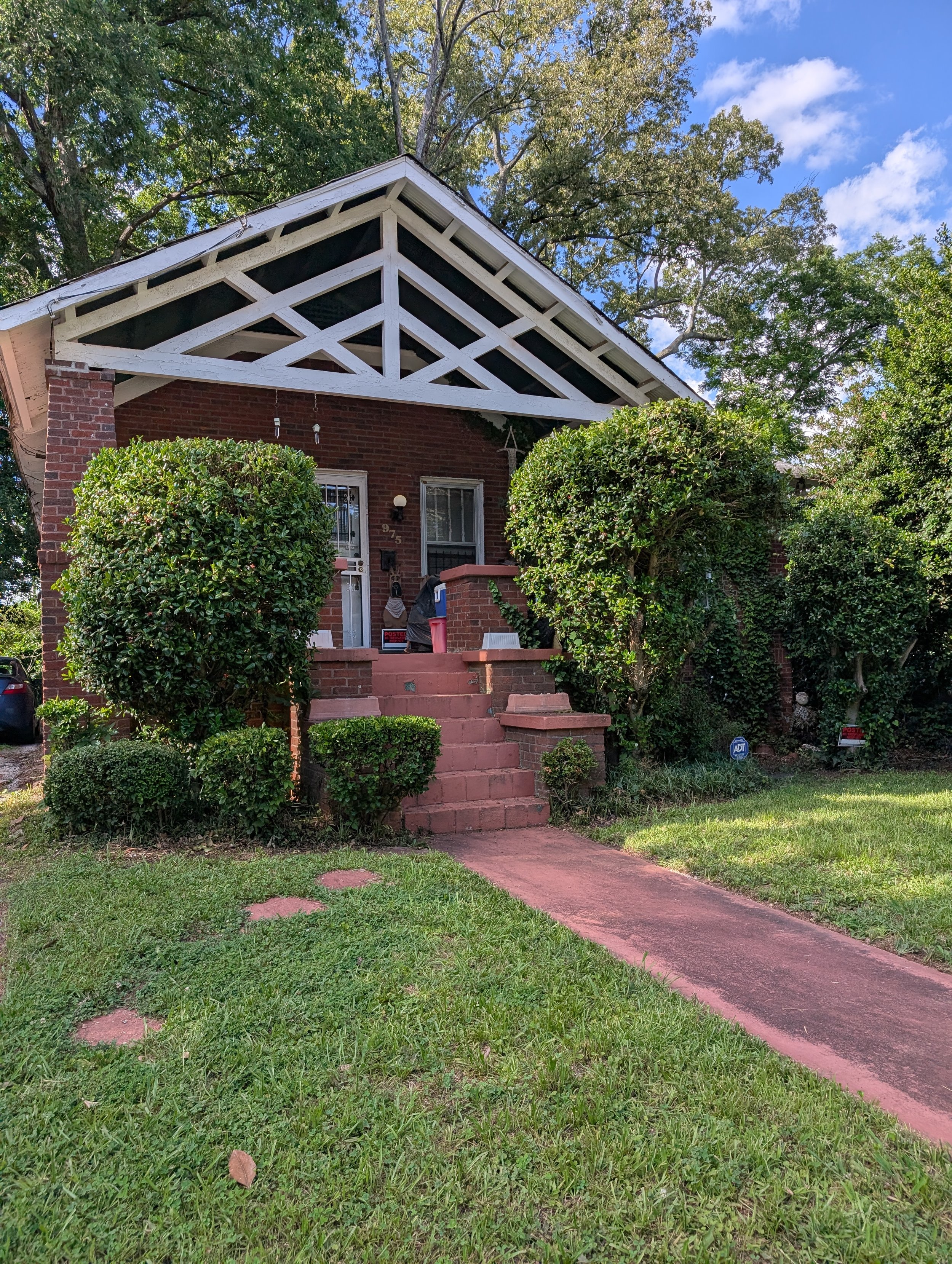
To be or not to be, that is the question. I bought a house in Atlanta 35 years ago. Now, when I bought this house, I wanted to make sure that this house had a nice backyard and a nice front yard, and both yards had trees. I struck gold. My home had some beautiful trees in the front yard and the backyard, but there were no trees on the sidewalk. If you live in Atlanta, we plant trees on the sidewalk so we can marvel and look at the trees as we drive up and down the street.
Well, I went to Home Depot and I purchased three dogwood trees. They were little switches at first, but I took time to purchase these three dogwood trees for three members who I loved so dearly in my family.
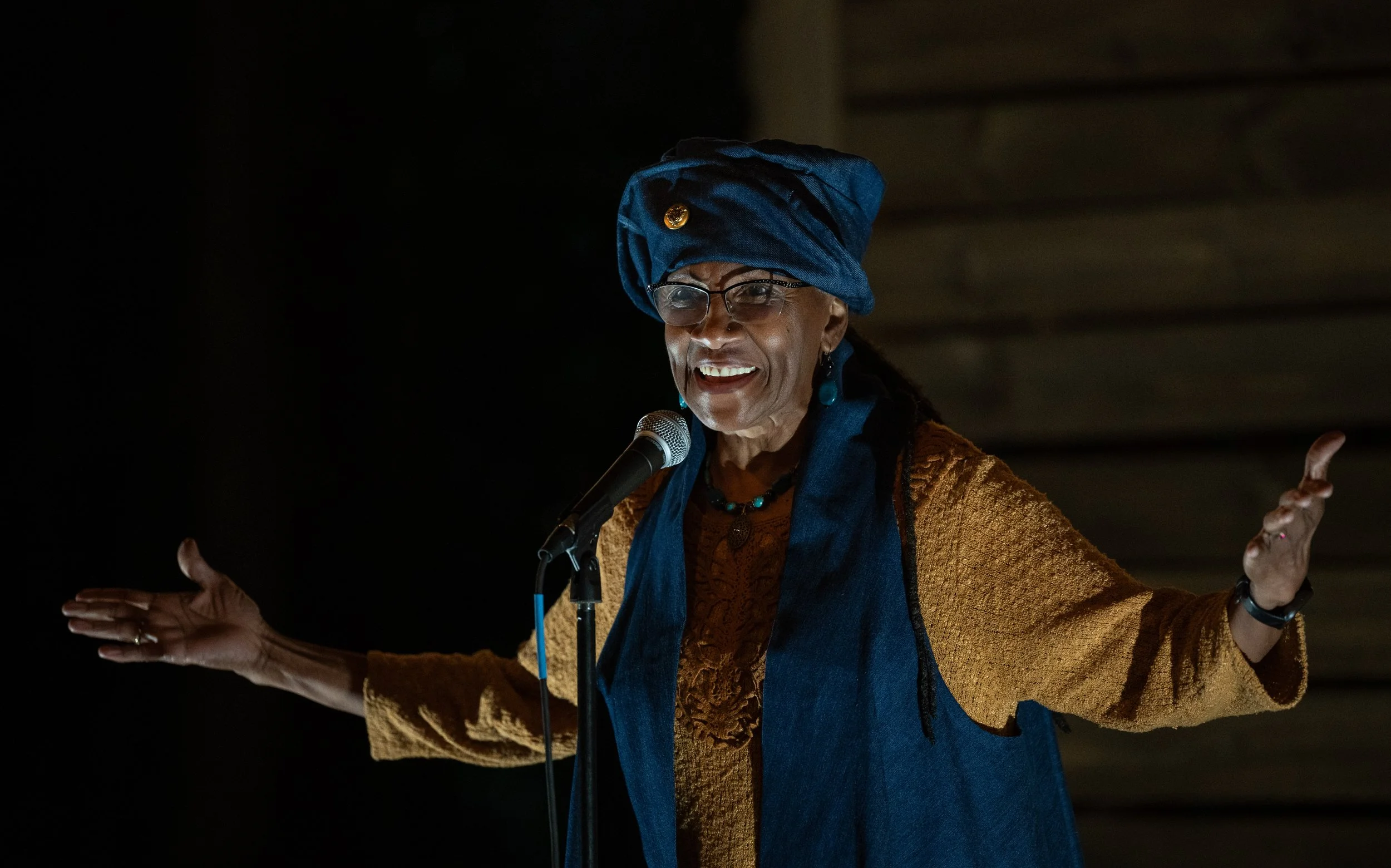
Gwendolyn Napier shares her story at Waller's Coffee Shop in Atlanta, GA in March 2025. Photo by Rob Felt.
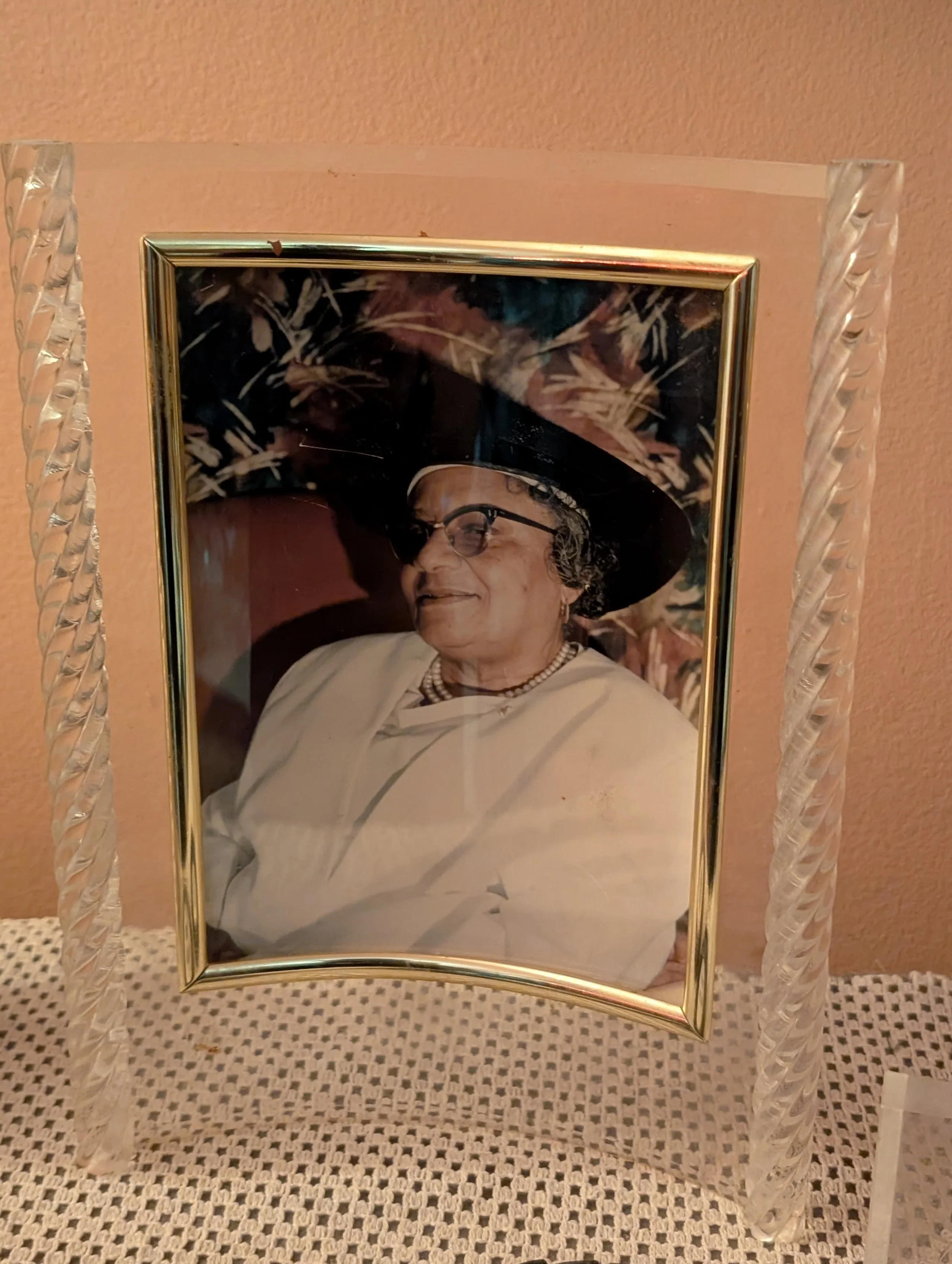
I named one tree and took time to plant one tree for Priscilla. Priscilla was one sister I had. She died very young, so I wanted Priscilla to be in my front yard so I could see her every day.
I took time to plant the second tree after my mother, and she was living at the time. I called that tree Sarah.
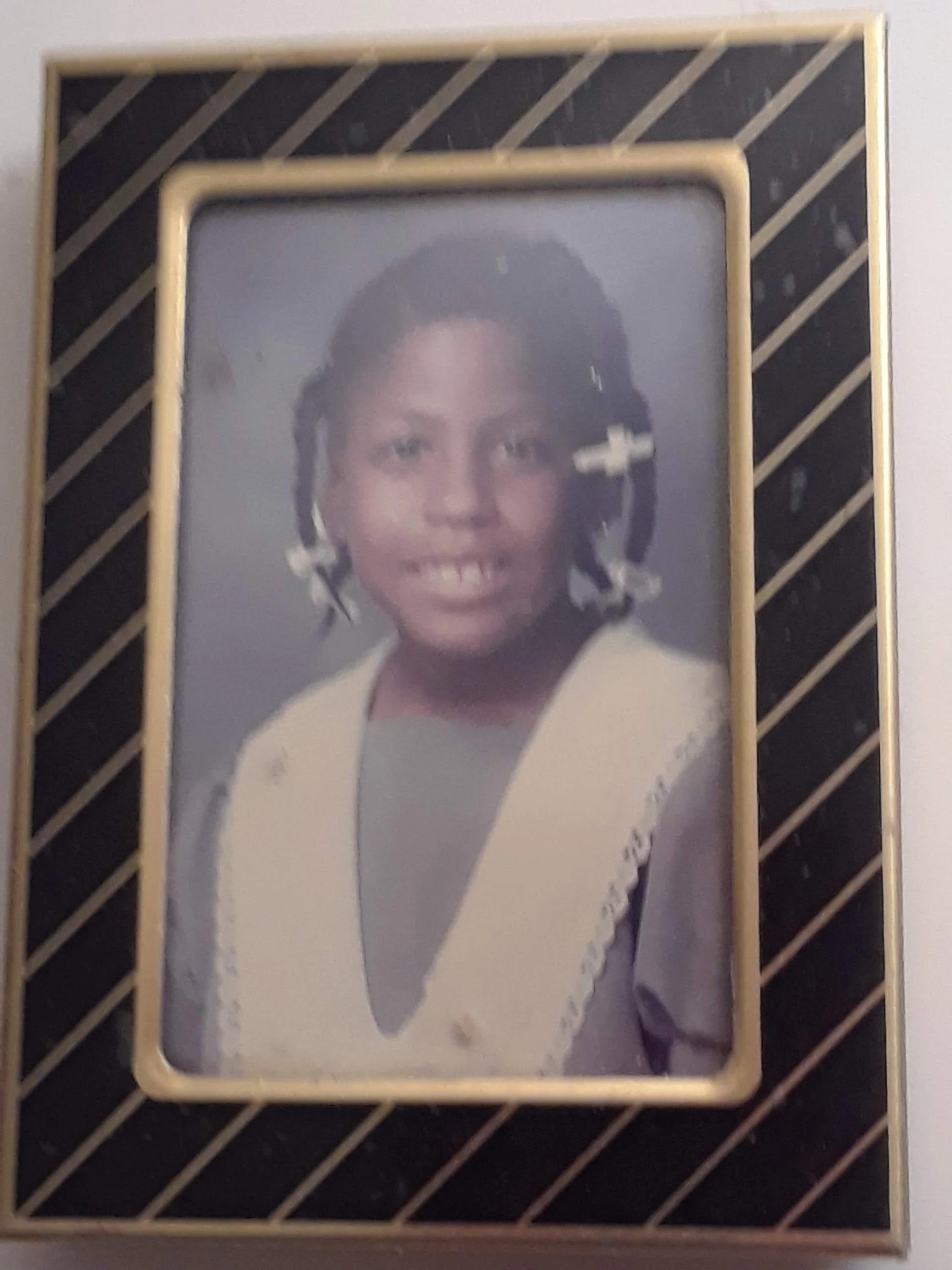
And then the last tree that I planted was for my young daughter. Her name was Sherry at the time, and she's still living. But she has grown up and she has moved away, and now she has her own family.
I took time to nurture those dogwood trees. I would get on my knees and I would just cultivate the soil. I would give those three dogwood trees love and water and just waited for the sun to shine. You see, I love those dogwood trees because they were part of my family.
Now, as time went by, if you lived in Atlanta, you know we had some pretty rough weather. I became devastated when we had that terrible weather. Well, one winter, my dogwood tree for Priscilla, it died. It came out. In the springtime, it was beautiful. Everybody would ride down Deckner Avenue in Atlanta and say, “Ooh, look at those beautiful dogwood trees.” And I would just sit back and say, “Yeah, those trees are mine.”
But when we had some really tough weather, Priscilla's dogwood tree died. The branches started just falling off and the tree just died. And when that tree died, I was devastated. I was so stressed out because I loved those dogwood trees.
Now, the branches started to fall off one by one and then the tree just split right down the middle. And my neighbor across the street said, “Gwen, I'll help you pull up the stump of that tree.”
He got his F‑150, he came over, and he connected his truck to the trunk and he pulled, and he pulled, and he pulled up the stump out of the ground. And when he did, I was crying because I had lost my baby sister. To see that dogwood tree being removed was like my sister had died all over again. So I weeped and I moaned about that dogwood tree. But I realized I had two more dogwood trees on my sidewalk. One was gone, but two were left.
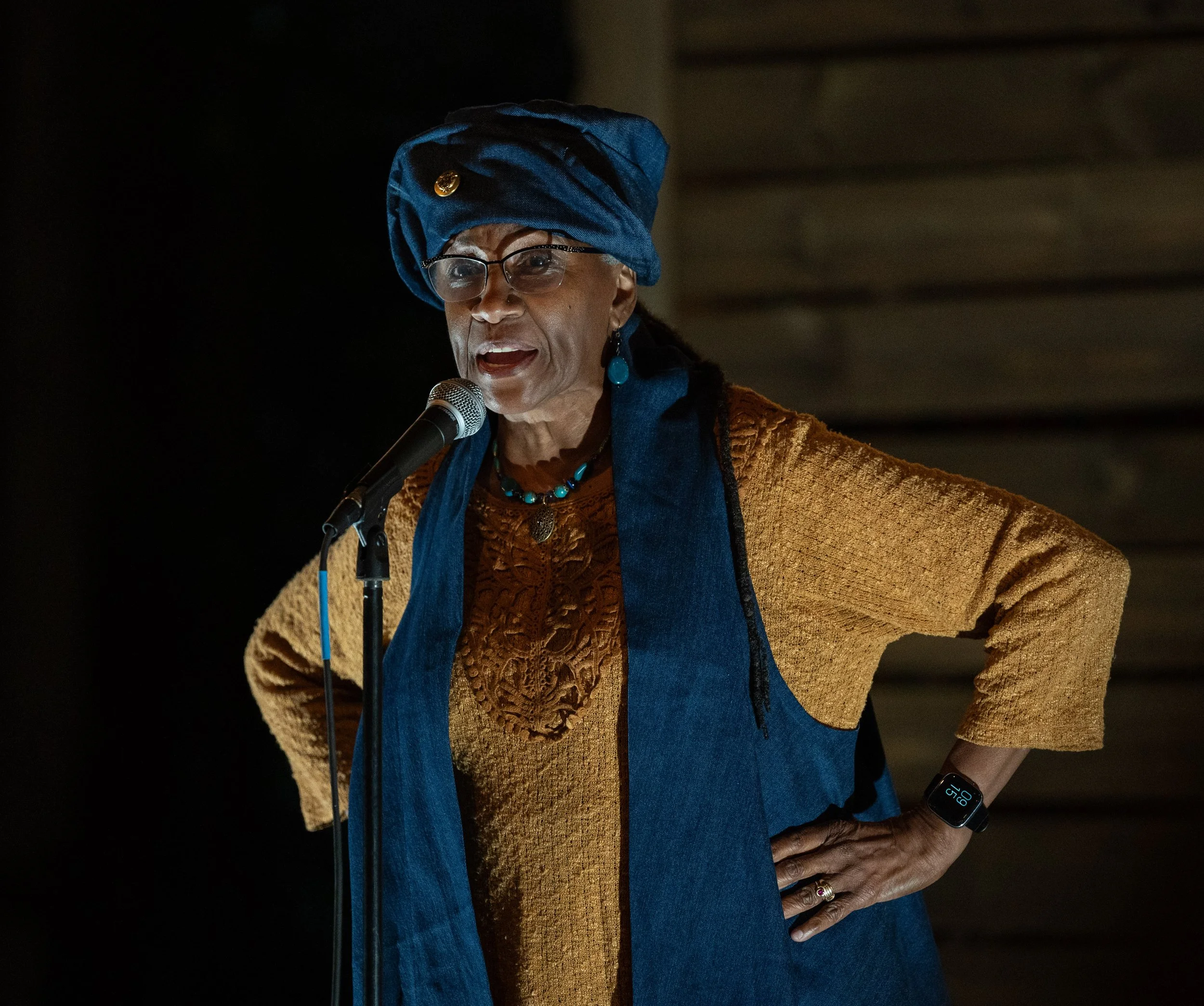
Gwendolyn Napier shares her story at Waller's Coffee Shop in Atlanta, GA in March 2025. Photo by Rob Felt.
Spring came back out again on Deckner. I could see the tree as if it was still there today. I could smell the dogwood tree. I could see the wind blowing in those dogwood trees. And you know, when April showers came to the dogwood trees, it would wash all of the beautiful white pebbles off of the tree, and you only had those green leaves left.
More bad weather came. And my second dogwood tree died. I cried and I weeped. I cried and I weeped again. I was getting more and more stressed out about my dogwood trees. When that tree died, my neighbor once again came over with the F‑150 truck and he pulled the tree up. He pulled and we weeped and we moaned together.
But spring came one more time. I had one more dogwood tree left, and that was the tree I had for my daughter. When I took time to plant that tree, she was five years old. Her tree died just this last fall. What happened? Georgia Power came out and they said, “You know, this last dogwood tree is really moving up into the wires on the street.” So they took time to trim the top of my tree.
And when they trimmed that tree, something happened. The tree split right down the middle. Yes. And that tree also died.
You see, I was crying and moaning because those trees were a part of my life. I took time to plant those trees that were switches, and I saw them grow just like my family. I moaned and I groaned. I didn't even have an interest to work in the yards anymore. I could work in the yards from sunrise to sunset. But once my trees died, I was dying also on the inside. I was moaning and crying, and I was missing those beautiful dogwood trees.
(singing) “I miss my trees. I miss my trees. Lord, no, I miss my trees. One day they were up, and the next day they were down. Lord, you know I miss my dogwood trees.”
But life didn't start right there. I got a call from Trees Atlanta. I got a call from Trees Atlanta and they said, “There are no trees on your sidewalk.”
And I said, “No more trees,” because I was devastated. Those trees were like my roots. They were like my story. They were like my dreams and like my glory. I said, “No more trees.”
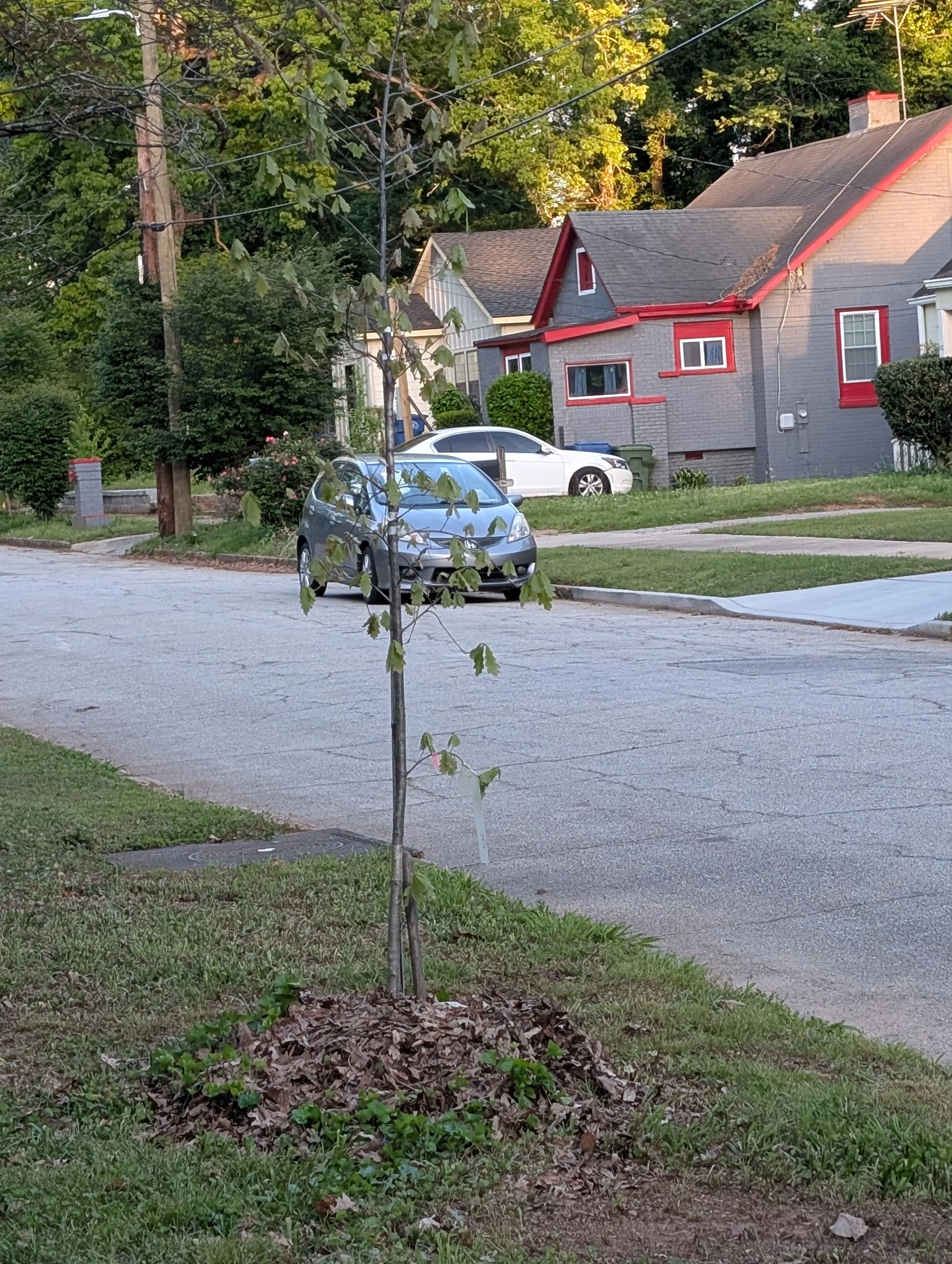
But then time went by and I looked at the hole where my daughter's tree was and I said, “Maybe, maybe.”
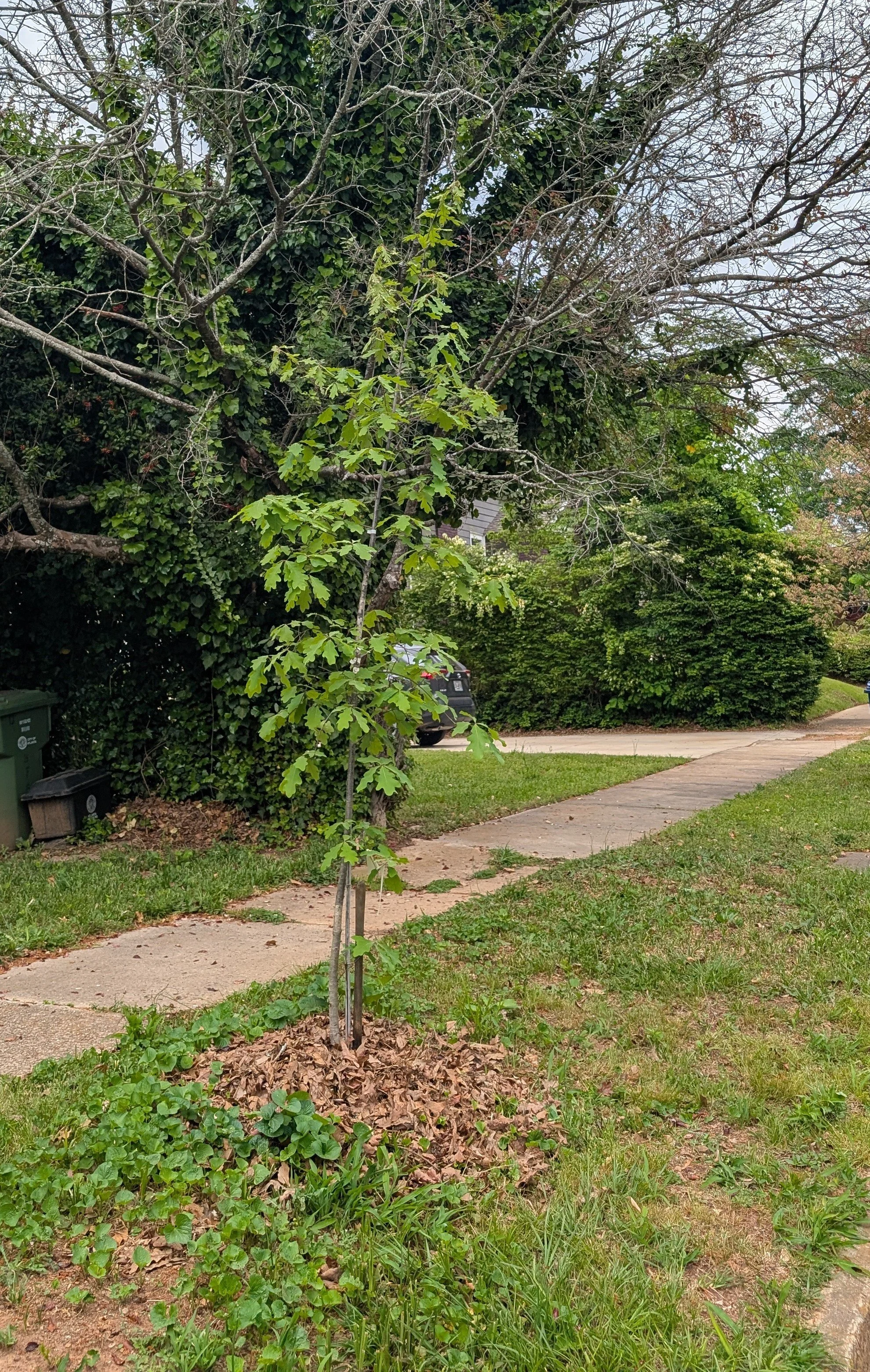
I called them back up and said, “Please, come out and plant that tree.” And when they came out, they took time to plant, this time, just one oak tree. Just a little switch.
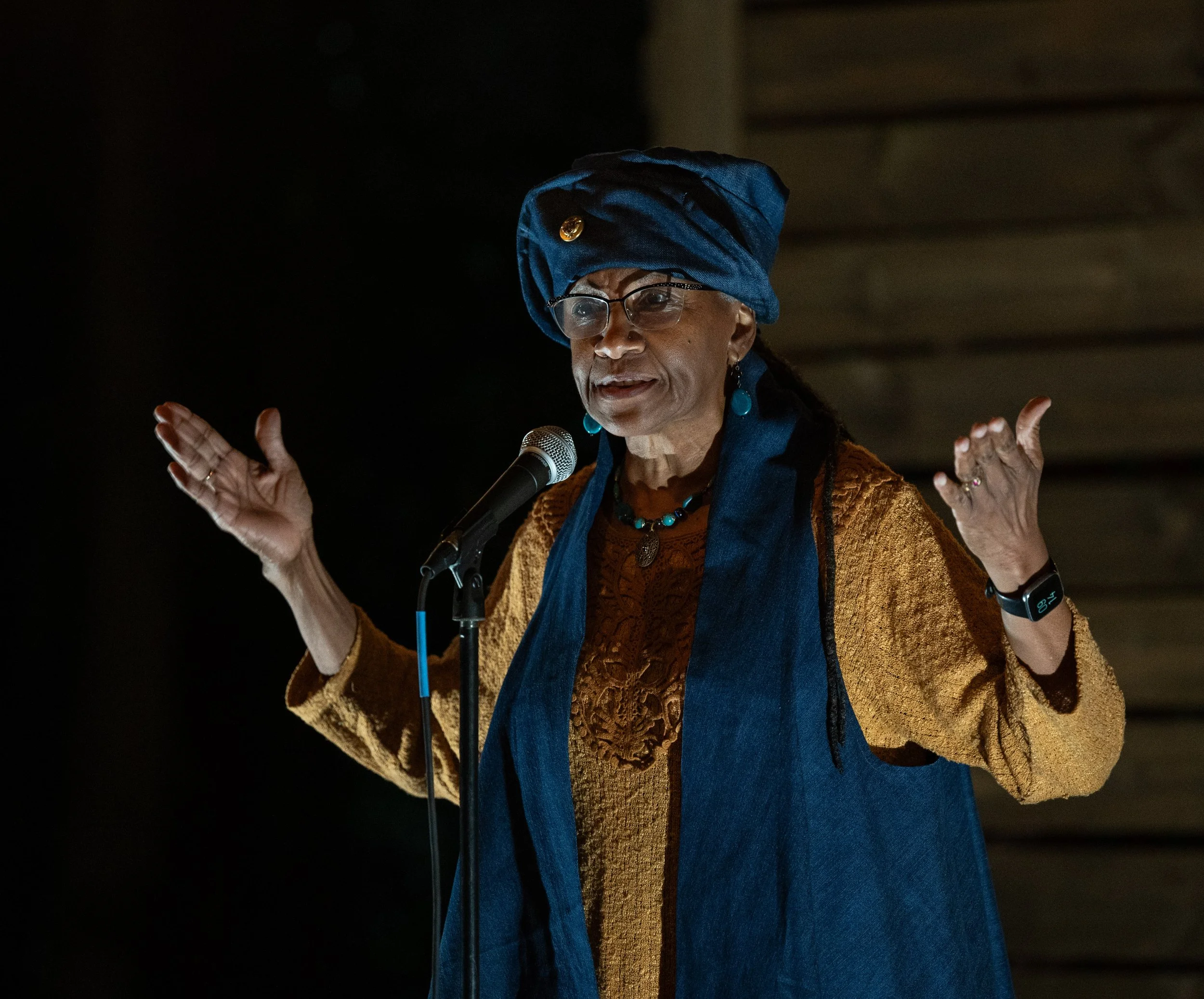
Gwendolyn Napier shares her story at Waller's Coffee Shop in Atlanta, GA in March 2025. Photo by Rob Felt.
And I thought about my own life. I had taken time to take care of my sister, baby sister who was deceased, my mother who was living there, she transitioned, and my daughter who had moved away and had her own family. I said, “Now it's time to take care of me.”
So when they took time to plant that oak tree on the sidewalk, it was just a little switch, it reminded me of myself as an elder, 70 years old. Just a little switch. I need something to love myself. And every day I look at that oak tree, that little switch. It's blooming just very slowly. It's growing very slowly in different directions. And then I stand back and look at my own life and say that tree is just like me.
And I remember what my grandmother told me. She said, “Gwen, it's okay for you to bloom right where you're planted.” And as a senior citizen, that's what I'm doing today. I have learned now to love myself.
So thank you Trees Atlanta for giving me back my life.
That is my story.
Part 2
I'm 11 years old, and I am sitting on the flybridge of a 40‑foot sport fishing boat called the Raptor. I'm clinging to the railing and my legs are dangling over the edge, and below me, a team of world‑class scientists are scurrying around in the cockpit of the boat, fighting seasickness as we roll up and down on the giant waves off the outer banks of North Carolina.
In the center of the cockpit, an angler is strapped into the fighting chair, pumping furiously on a reel that's about the size of my head. We are hunting giant bluefin tuna, and we've got one on.
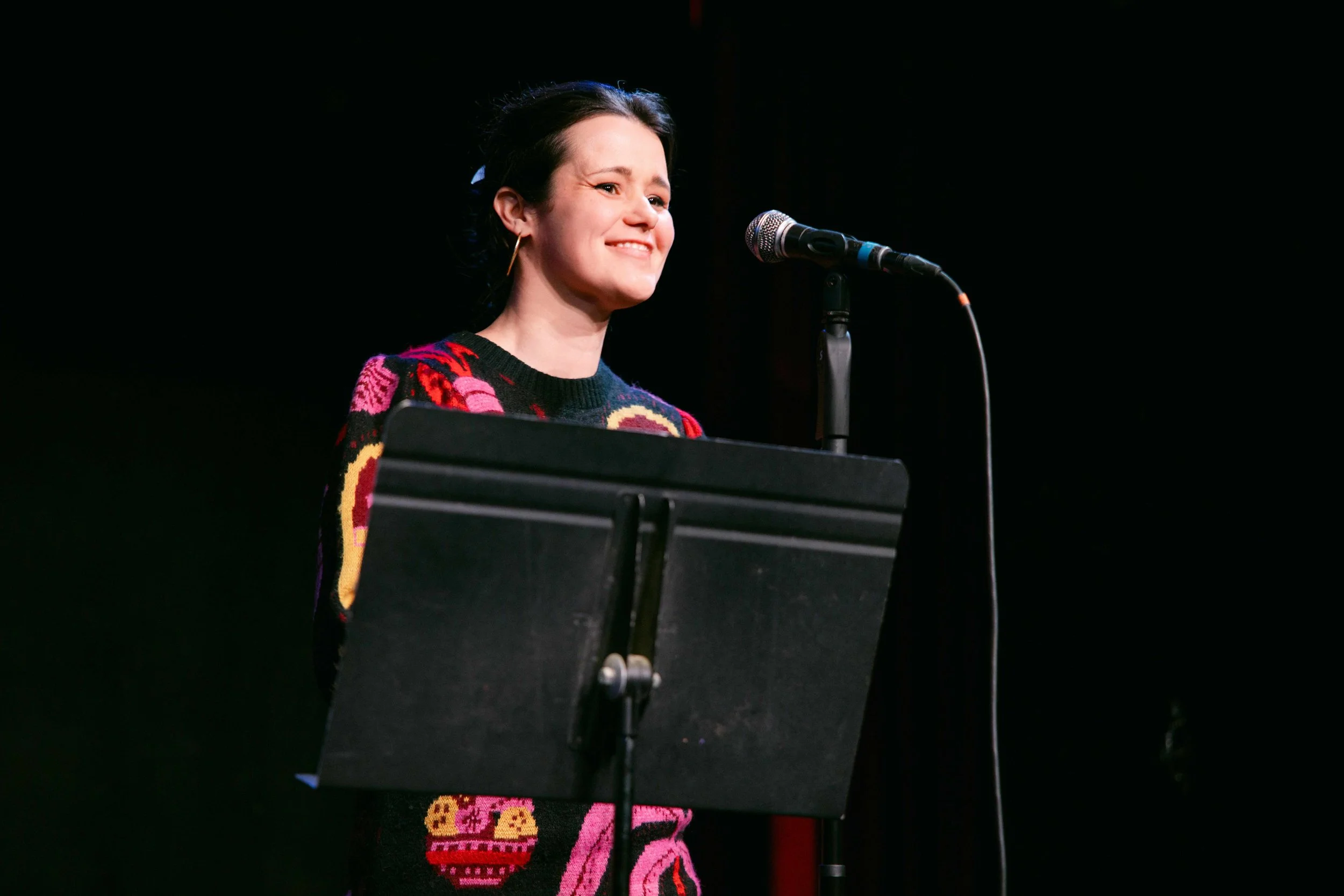
Bimini Wright shares her story at Under St Marks Theater in New York, NY in February 2026. Photo by Arin Sang-Urai.
My father, Captain Peter B. Wright, is behind me at the helm of the boat. Imagine driving a car backwards, so that you have your back to the steering wheel and the controls so that you can see what's happening out the back window. He's doing that, but with a 40‑foot boat. He has his back to the controls, back to the steering wheel. His hands are busy on the gear and the throttles. His eyes are on the cockpit below, and he's yelling instructions to the deckhands.
He throws the boat into reverse, and the air fills with the smell of diesel and black smoke. Later, I will blow my nose, and it will be black.
It's January. Now, I am from the tropical part of Australia, so I associate fishing with warm weather. I'm used to snorkeling and sunscreen and wearing a bathing suit and jumping in the ocean to cool off. But here I am, sacrificing my summer vacation, if it's Australia, January is summer, and I'm wearing thermal underwear, flannel‑lined jeans, foul‑weather gear, and beanie gloves fighting off the chill of the saltwater spray. To be honest, I'm kind of bored. At this point in my life, I've already spent quite a bit of time on boats watching my father's clients catch fish.
So, a little bit about my father. I always struggle to sort of describe my father to people that don't know a ton about fishing. Because, I mean, fishing culture is all about exaggeration, right? “It was this big.” Sure it was. But you'll just have to take my word for it when I tell you that my dad was a pretty big deal. I've seen strangers ask him for his autograph. I've watched people bid thousands of dollars on him at charity auctions for the honor of having him on their boat for the day. He's hosted television shows, he's written articles, and he's traveled the world.
My name, Bimini, is a group of islands in the Bahamas, kind of known for its fishing. Ernest Hemingway lived there for a while. Before anyone asks, just because people do, I was not conceived there, but that is where my father learned how to fish in his teen years.
This isn't a normal day of fishing. The tuna that we haul aboard the boat will not be... we're not trying to land a trophy. We're not trying to fill a cooler. It's not going to be eaten. In fact, if everything goes according to plan, the tuna won't be harmed at all.
What's happening on the deck below looks pretty chaotic, but there is a carefully choreographed ballet happening underneath it all. And the leader of that ballet is Dr. Barbara Block, a world‑renowned marine biologist and professor out of Stanford University. She's here because bluefin tuna are disappearing.
Her team is trying to understand how this powerful fish moves through the ocean. Overfishing and climate change has decimated the population. She's after data to exactly figure out why. But the problem is that bluefin tuna don't really offer themselves up easy for study. It's hard to study an animal that spends all of its time underneath the surface. So science is going to have to borrow the tools of fishermen, and that's where my dad comes in.

Bimini Wright shares her story at Under St Marks Theater in New York, NY in February 2026. Photo by Arin Sang-Urai.
Now, tuna are a prize, but they don't really fight like other popular sport fish. A marlin, for example, throws these showy, athletic displays, jumping on the surface, trying to throw the hook. Tuna, on the other hand, tends to sound, which means that they, at the risk of teaching you things, they tend to sound. They dive deep and fast. They put up a great fight. Pound for pound, they're the strongest fish in the ocean. But it's fun if you're the one in the chair. It's not really the most entertaining to watch.
I understand that we're here for an important purpose, but I'm cold, and I really don't understand the appeal of fishing in the snow. But then I get a glimpse of our quarry. Now, I want you to picture a silver and black football the size of a pony. It flashes against the surface, this torpedo of pure muscle, before it dives again into the inky blue depths. It causes the drag on the reel to scream in process, and the wireman swears as he drops the line that he was holding around his fist.
Now, because of who my father is, as I mentioned, at this point in my life, I've seen some big fish. I've caught some big fish. And I'm 11, so I'm that awkward age where, in a misguided attempt to seem really mature, you just act like you're unimpressed by everything. But even I, the jaded preteen, cannot help but gasp at the sheer power and size of this monster.
Before he was a celebrity fisherman, my father was a man of science. He actually went to school for marine biology, and it was only a sort of fluke, a last‑minute trip through Australia on his way back from a graduate studies research trip in the Antarctic that he was set on the path to becoming a game fisherman in the first place.
He was a great storyteller. And he would say in jest, “Never let the truth get in the way of a good story.” But when it came to the science, he was actually pretty rigid. I believe it's what made him the best at what he does, did.
He understood physics, which is crucial when you are trying to haul in a 1,400‑pound marlin on a fishing line that breaks at 130 pounds of resistance. The importance of collecting off data to make a rational claim was very important. He had no patience for superstition, and fishermen are a pretty superstitious bunch. If a friend of his was like, “No, man, this is my lucky lure. This one catches more fish than anyone else.” Dad was very fast to point out, “Of course it catches more fish than any other lure. You put it in the ocean more than any other lure.”
I remember that he would drill me on the difference between correlation and causation over breakfast. “Bop,” my nickname was Bop, “if every heroin addict drank milk as a child, does that mean that milk causes heroin addiction?”
“No, Dad, obviously not.”
He's like, “Okay, well, this article says that people who eat granola tend to live 10 years on average longer than other people. Does granola equal longer life?”
“No, Dad, it's probably that people who always eat granola also happen to make some healthier choices.”
My father really encouraged me to study science, not so much so that I would choose it as a career, although I'm sure he would have been thrilled if I had, but he just wanted me to understand the world. He didn't want me being duped by lazy thinking or half‑baked claims. And he always made an effort to introduce me to successful and interesting women in their fields.
So that's why I was here, women like Dr. Barbara Block. That's why I was watching from above as this team of graduate students and professors out of Stanford and Duke Marine Labs hauled a six‑foot‑long fish onto the boat, sticking a hose into its mouth so that oxygenated water would flow over its gills, as she cut a little slit into its belly and inserted an archival tracking tag, and then sewed it back up again.
I just want to point out, by the way, that this was before we all had GPS in our pockets. You couldn't just get an AirTag on the internet or at the Apple Store. I don't think Apple Stores were a thing at that point either. This was thousands of dollars of cutting‑edge technology that they were sticking into a fish and then throwing back in the ocean, just hoping that one day they would get that data back.
They did, by the way. Look it up. I can't go into it here. I don't want to do a TED Talk on tuna, because that already exists. Tag‑A‑Giant, TED Talk, great stuff.
They took meticulous measurements. Again, so exaggeration, right? No, no. The length of these fish were all meticulously recorded for science. A fish that was under 70 inches long counted as small. I'm 68 inches tall, so a fish two inches taller than me was a small one. And they didn't count as truly big unless they were over 600 pounds.
A couple of times, I was even permitted to be the one who collected a DNA sample, meaning taking a little tiny sliver out of the second dorsal fin and putting it in a test tube, a responsibility that I now recognize hundreds of graduate students would have killed for.
I heard the point made recently that we could all be Nepo babies. It's just that we don't choose to go into the right professions. And although I did actually originally enroll in college for marine biology, I obviously took a different path. But what's funny is that in his later years, my father actually said that he was in the entertainment business because taking people fishing was entertaining them after all.
My mouth is getting dry, so I'm turning American in an attempt to be understood. Sorry.

Bimini Wright shares her story at Under St Marks Theater in New York, NY in February 2026. Photo by Arin Sang-Urai.
His entire life, though, my father remained dedicated to science. And like I said, I believe it's what made him really good.
Alzheimer's is a bitch of a disease. And Dr. Block herself actually commented in my father's final years just how cruelly ironic it was that my father, of all people that she knew, was losing his mind to it.
But when he was first diagnosed, he was actually accepted into a drug trial, which was very exciting for multiple reasons. Obviously, he was getting access to cutting‑edge medicine that wasn't on the market yet. But more than that, he found a lot of personal meaning in the fact that even in his deterioration, it would be measured, tracked, and contribute to science.
The year that my dad died, the Tag‑A‑Giant Foundation tagged their 2,000th tuna. And on that satellite pop‑up tag was a mixture of resin and my father's ashes. We'd already given my father a bit of a Viking funeral. That's a whole other story. I couldn't get it to sink. But they released this huge fish into the ocean with my father on it.
And his ashes don't contribute to the data. It's purely sentimental. They don't make the science more precise or better in any way, but it really feels right that a man who spent his life observing, measuring, and respecting the ocean became part of the record anyway.
Thank you.