Science can feel isolating when you don’t see yourself reflected around you. This episode brings together two stories about the search for representation, connection, and belonging in STEM.
Part 1: Graduate student Angelique Allen doesn’t fully understand the strong connection she feels to the 2015 animated film Home.
Angelique Allen is a graduate student at the University of Oregon, the founder of Dreams of a Scientist, and an aspiring dirtbag. She spends most of her time thinking about science, with a focus on researching octopus brains and creating art that helps integrate science into society. She spends the rest of her time sleeping in the back of her car, climbing rocks, and doing anything she possibly can to see a sea slug (including but not limited to SCUBA diving, snorkeling, and tidepooling). To follow along her scientific journey (and see what her elderly cat is up to) check her out on instagram @angeliques.outthere.
Part 2: Growing up in segregated 1950s Baltimore, Ken Phillips learns early who society says he can’t be.
Ken Phillips has served as Curator of Aerospace Science at the California Science Center in Los Angeles since 1990 and is responsible for shaping its exhibits and programs in aeronautics and space exploration. In 1991, he began planning a display of a flown space shuttle orbiter that culminated in NASA awarding the Space Shuttle Endeavour to the California Science Center two decades later. He is now working toward the opening of the 200,000 square-foot Samuel Oschin Air and Space Center for which groundbreaking occurred in June 2022. Ken has taught numerous courses in astrophysics, planetary geology, and space exploration to primary and secondary school students, and is an adjunct professor of the practice of physics and astronomy at the University of Southern California (USC) where he teaches the freshman seminar entitled “The Space Shuttle and our Place in the Universe.” Through the USC Prison Education Program, he also teaches introductory astronomy to students in correctional facilities. He received his bachelor’s in physics from North Carolina A&T State University, a master’s in general engineering from the University of Wisconsin, and a doctorate in environmental engineering from The Johns Hopkins University. Ken loves model trains, swimming, and bull dogs!
EPISODE TRANSCRIPT
PART 1
As I hop on the plane to go visit my friends from college, I send a message to the one that I'm most excited to see. So something along the lines of, “Hey, about to board the plane. Remember, the only rule this week is no talking about science.”
And I meant that. I was feeling really burnt out of just banging my head against the same problems, not really making any progress. I was also really struggling to find this balance between these two passions I'd recently discovered. One being actually going to lab, coming up with the experiments and doing them, and the second being sharing that work that I was doing, so that people from any background or set of expertise could better understand science and what scientists actually do.
So I was pretty relieved and kind of smiled down at the response of, “Sounds good. See you when I get home from work.” And, “I'm no scientist, so that shouldn't be a problem.”
So with that, I closed my eyes, I turned my phone on airplane mode, and got ready for a week of rock climbing and whitewater rafting and just having a good time with all my friends from college, but also this one specific person, Jay.
This guy is a white guy with brown, curly hair and bright blue eyes that had caught my attention back in college and, at this point, I was kind of crushing on. So after about a couple days of rock climbing, whitewater rafting, being in this pure adventure mode, I was saying things like, “This is so much fun. I love sleeping outside and adventuring and just not going into any buildings.” But I was also kind of saying, like, “Ah, my back hurts. Maybe I really don't want to sleep on the ground again.”
And so with that, we went back into town and just hung out like we used to, you know, drinking beers, sharing stories, and then catching up over the years.
At some point, Jay and I start exchanging stories that kind of highlights how different our upbringings were. I loved crafting and remember spending hours painting with my mom. The main reason that I would be hopping around outside would be when we would go to the beach and I'd collect seashells and sea glass, and was way more excited about that scavenger hunt than doing anything adventurous in the waves.
Compared to Jay, who grew up hunting and fishing and spending time outdoors in this more rugged type of way.
As we continue drinking beers, exchanging stories, and just hanging out, we eventually plopped down on the couch and I turn on Netflix. We start looking through the, like, top ten featured films, and nothing really catches our eye. Then we're flipping through the genres, looking for something to watch, which eventually just turns into me muting the TV and we continue to chat.
But then suddenly, out of the corner of my eye I see this little purple blob with a white cat sitting on its head. I immediately grab the remote as I say, “We are watching this movie.”
This movie is called Home, which wasn't really a box office hit. This movie had no catchy songs, it had no characters that people really latched on to, like Lilo and Stitch or Nemo. It had a pretty typical story arc where these two characters can't be friends because of their background, but then they get over it, they sing some songs, and then they're able to solve this larger problem, which, in this case, is aliens taking over the Earth.
And these two characters are, one, a little purple alien who is voiced by Jim Parsons, who is more commonly known as Sheldon from The Big Bang Theory, and a light‑skinned girl with brown, curly hair and brown eyes who is voiced as Rihanna.
While I wish I could say I really love this movie and these characters and this was really special to me and I wanted to share it with this person in this moment, that would just be a lie. I don't think I had thought about this movie since I had first watched it my freshman year of high school. In my memory, it kind of just blends in with Hotel Transylvania and The Lego Movie and all these other movies that came out in 2015.
So you can imagine my face when, after about five minutes of watching little purple aliens invade Earth, Jay looks over at me and says, “Why the hell are we watching this movie?”
And I stare back into those blue eyes almost blankly for a second, and then like any drunk person who doesn't know the answer to your question, I just started to ramble.
I said, “I don't know. It's just cute and I like it. And, you know, the fact that there's this little purple alien being voiced with this, like, scientific voice that we're used to is hysterical. It's comedy gold.
And I love this other little character voiced by Rihanna. Like, she's so cute, and I just really like her, and she's, like, singing all these songs. Normally, Rihanna's singing these adult pop songs, but now they're like, she's going on little runs and singing for kids, and that's just adorable.
And, I don't know, it's also kind of relatable. Like, if I was in a scenario where little purple aliens took over the world, I'd like to think that I would befriend the little quirky one and we would sing some songs and go on a magic carpet ride and then save the world.”
Jay kind of looks at me and nods, and I am just in full rambling mode.
I continue on to say, “You know, it's just really cute and I just like it. And if Rihanna makes me feel like I can save the world just because her character looks like me, then I hope that I can do the same thing with my science. That is ultimately the goal of sharing the fact that me, a light‑skinned girl with brown, curly hair and brown eyes is the one who's in the lab doing the science. And I hope that inspires other people who look like me to feel like they can also do science.”
Jay again nods and then says, “That's making sense.”
And I just kind of keep chatting. I go into a deep dive saying, “I grew up as a mixed girl in a white neighborhood, and I just never saw anyone who looked like me. Even at home, it was like my mom is white and my dad is black, and so neither of them even looked like me.”
And there were students or kids at school who would say that, “Did you get a perm,” or, “Do you get spray tans?” I would just shrug and look at them like they were stupid, and walk away because I didn't even know why they were really asking me these questions. It was just clear that while I looked kind of different to them, we never talked about why.
Even at home, we didn't talk about how people would view me because of my skin color. We didn't talk about race or representation or anything like that.
As we're sitting here watching this movie, there are still aliens invading Earth, I realize that this is the first moment that I feel the impact of representation. I had read a lot about it and had talked to a lot of other scientists and friends about it, but this was the first time that I had really felt it, while I'm sitting here watching this movie that, according to Rotten Tomatoes, the content quickly collapsed with a white guy who grew up doing activities with a bunch of other white guys. Was kind of this perfect moment where all the puzzle pieces came together and I really felt the impact of seeing someone who looked like me do something and was able to internalize it a little bit.
And this feeling has stayed with me for a long time, but I was definitely still feeling it when I woke up the next morning, which looked a little bit like me crawling out of bed, looking for alcohol‑absorbing calories. We eventually made it there. We hopped in the car, we went to the local diner/restaurant.
And I've got this feeling and one of these questions that start coming out of like, “Okay, so, you, I know that you're not on Instagram or Twitter, but you have to get that technology‑induced dopamine from somewhere.”
And Jay says, “Yeah, from YouTube and Reddit mostly.”
I'm like, “Okay, so you understand the importance of science communication.”
And he says yes.
And I explain that, while it's awesome that there are so many people who are sharing their research and what they're discovering, I want to go one step further and show that I am the person who's doing it, and kind of include that representation aspect, so that people who look like me can see the fact that I'm doing it and feel like they could also do it.
And similar to the night before, Jay nods, but this time, instead of continuing to rant, I almost get hit with a wave of self‑consciousness or embarrassment. I feel like, in that moment, I had just told someone who was not in science that my career in science was so important and unique. And that just by sharing my story and emphasizing the fact that it's me, the one who's doing it, would change people's lives. That just didn't quite sit right with me.
I started to do a little bit of self‑reflection in that moment and think about how could I make the conversation not just about me, but about us, about scientists who became scientists despite the fact that they didn't see any scientists who looked like them.
And I held on to that idea as I went back to lab and got back into the normal routine of things. I'm making a lot of salt water for our animals. I'm trying to optimize this experiment that would allow us to see brain activity in real time. But I'm also really trying to think about how I can expand the conversation and include other scientists who come from different backgrounds than myself so that, truly, everyone could kind of have this moment of representation.
And now, as I am making projects, like a children's book that's going to be highlighting 20 active scientists from all different backgrounds, or creating postcards that highlight local scientists and printing them out and putting them in bars and coffee shops for people to take for free, I hold on to this question of, how can I really highlight and feature as many different scientists as possible?
More specifically, I think about how can I harness the power that the movie Home had for me, making you feel like you can do something that you didn't previously feel like you could do, but almost making you feel that way without making you know you felt that way, doing it in kind of the sneaky way like this movie did for me, where I only realized it many years later.
So now, as I continue to come up with these projects and ideas, I keep this mission in my head and think about how I can bring people into science in a way that makes them say, “I don't know, I just like it and think it's cute.”
PART 2
We're going to go back to Randallstown, Maryland. There's a small town about 10 miles west of the city of Baltimore. It's 1954. I'm five years old. And my very best friend, Lou Tucker and I, are going to be spending the week together.
Now, Randallstown was this amazing place. This is in 1954. It's like a page out of a Tom Sawyer and Huck Finn story. It's that kind of place. It's like rolling hills. It's got a forest. Inside the forest, dads cut out a space for a baseball diamond where we could play. It's got streams. You can catch frogs. We could throw rocks at bats all night long. We'd never hit one. All kinds of cool stuff you can do.
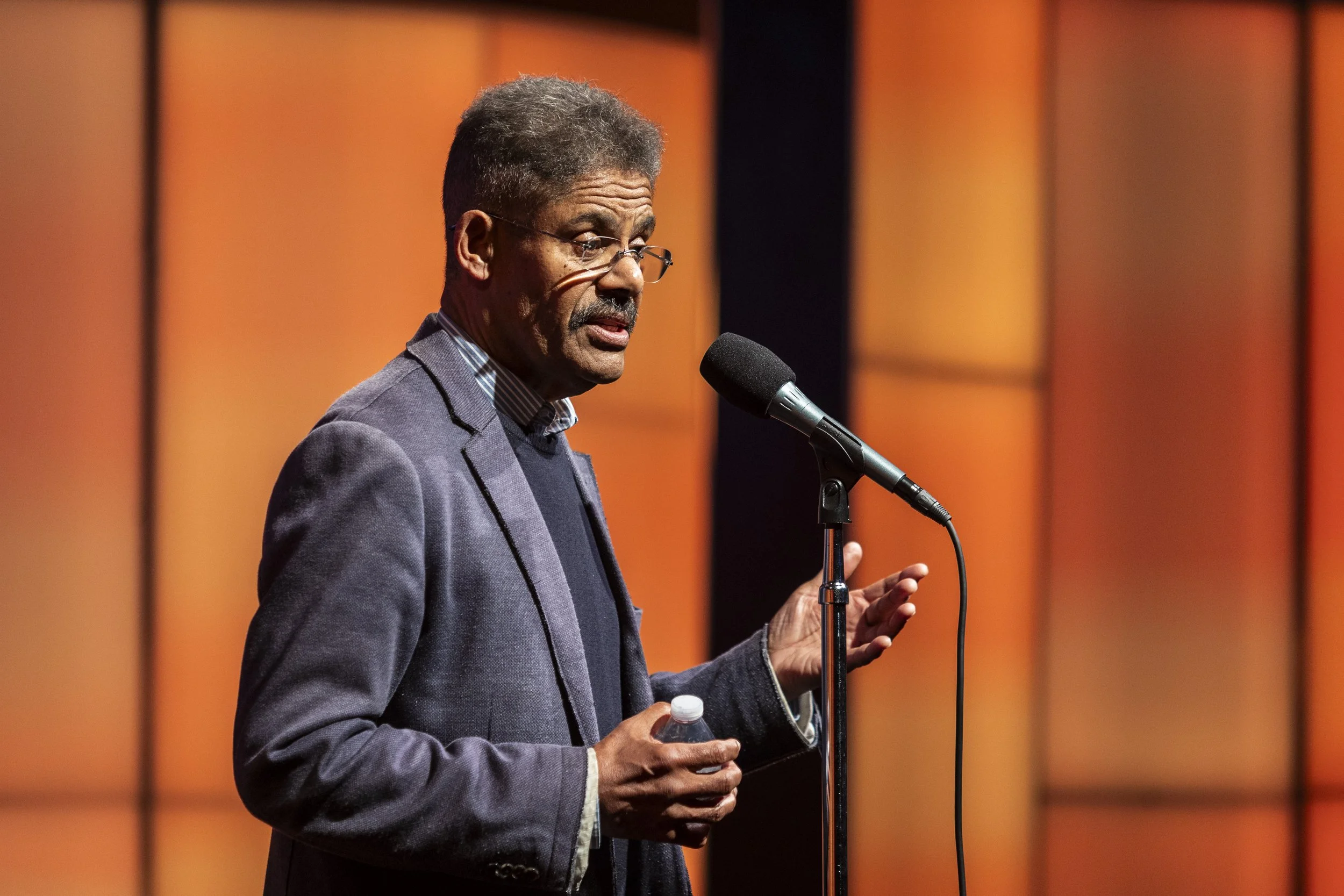
Ken Phillips shares his story at LAist in Los Angeles, CA in December 2024. Photo by Louis Felix for LAist.
The coolest thing about Randallstown was that this was a place where you could ride your bike. And Mr. and Mrs. Tucker only had one rule. That was be safe. Actually, there were four rules. Number one, be careful. Number two, don't go on the main road. Number three, watch for cars, and number four, be home by dinner. That was it. We were free to go.
So we went up on our bicycles to this place called Deerhead Farm. And the reason we went to Deerhead Farm is because we're cowboys, because we're five years old. There were horses on Deerhead Farm. And we would see these kids riding the horses because we'd pass back and forth between this place dozens of times in Mr. and Mrs. Tucker's car. It was so much fun, and we're five years old. We're cowboys and cowboys ride horses. That's what they do.
So we got on our bikes and we rode up to Deerhead Farm. We went right up Winands Road, left turn on Old Court Road, we get to Deerhead Farm, and we lay our bicycles down. Then we climb up under this long, white fence they had that was a partition to keep the horses in. We climb up on the fence and we wave to an attendant.
The attendant comes over, and he says, “Hey, guys, what can I do?”
And we said, “We're here to ride the horses at Deerhead Farm. This is such a fun place, that we want to ride the horses.”
And he says, “Well, sorry, guys, white only.”
And we say, “White only? What does that mean?”
And he said, “You have to be a white person to ride a horse here at Deerhead Farm.”
So we said, “Well, are we white?”
And he said, “No, you guys are colored.” He was very kind with that. He could have said… gone to a lot of places with that, but he said, “You guys are colored.”
So we said, “Okay,” and we went off and did probably a hundred other things we could have done.
Now, it wasn’t an offensive thing but it felt weird. It didn’t just feel right. It felt weird. And I can’t rely explain why except this. If the guy had said, “Look, you got to be four feet tall,” I could have understood that. Because you’re either four feet tall or you’re not. But he didn’t say that. What he said was, “You can't come in because I see you differently than I see other people.” That didn't make any sense to me because kids are kids. They looked like they were having fun. How could I be different?
And that stuck with me for a while. Because what he told me was, “I'm not going to give you permission to do something that you want to do.” I didn't understand why that permission wasn't given.
Now, that misunderstanding, or lack of understanding on my part, I should say, didn't last long. Because this is America in the 1950s, and I could remember hearing my mom and dad talk about all the hoops they had to jump through and all the stuff they had to do, how clever they had to be, just to get done the things they needed to get done in life. They were some very clever people.
I was also remembering on the news and on the radio, you would hear things like these kids, black kids in a place called Little Rock, Arkansas, and they were confronted with a whole lot of difficulty in getting to the high school that they were supposed to go to.
So very quickly, I put this together, and I said, “You know, there are two societies here, and one of those societies really doesn't want very much to do with me. They don't want to give me permission to function fully in the broader context of society.”
The other society, which was primarily people who looked pretty much like me, were saying, “You know something, there is a way for you to get around this, and we're going to show you how to do this.”
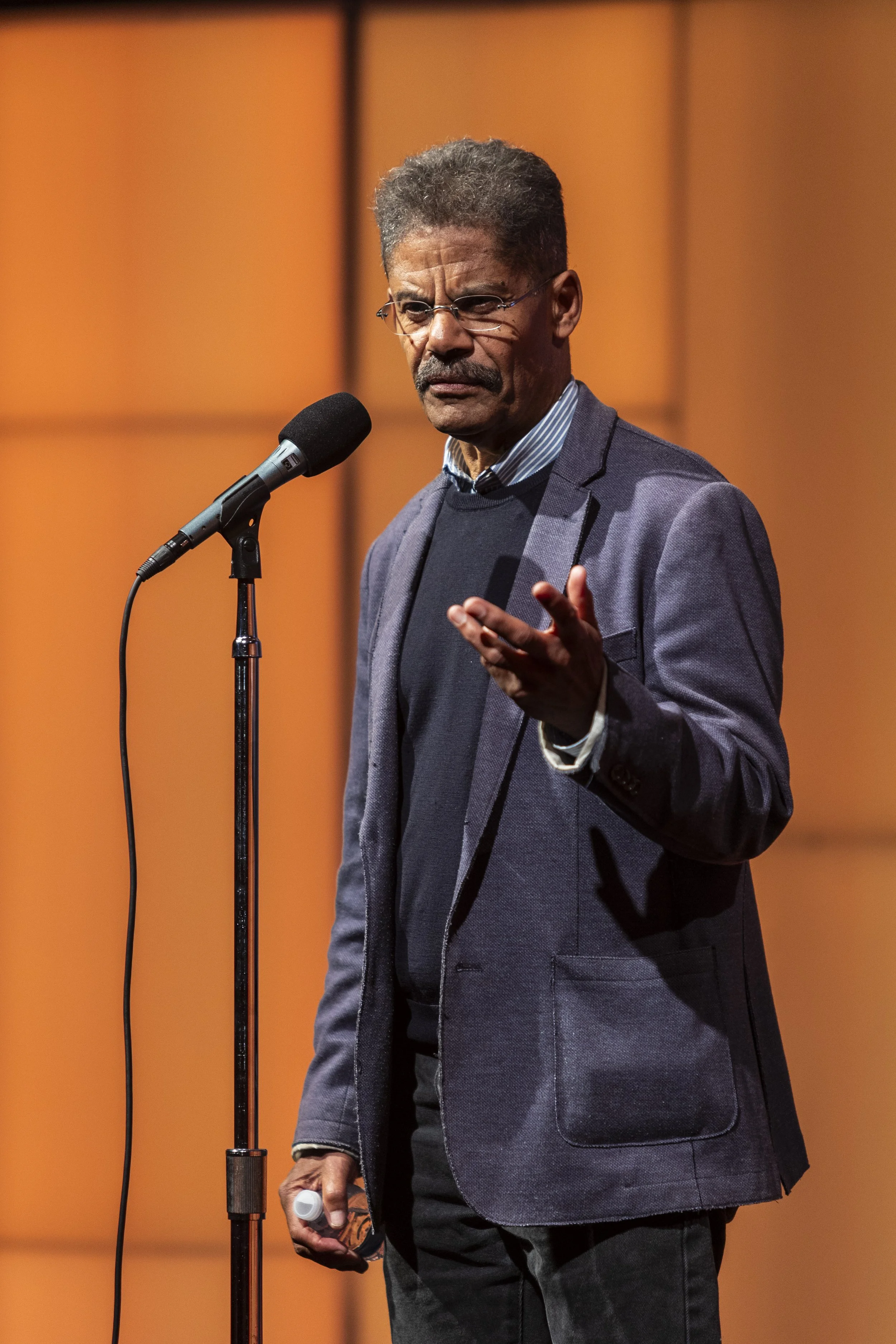
Ken Phillips shares his story at LAist in Los Angeles, CA in December 2024. Photo by Louis Felix for LAist.
So I'm there. It's about 1960, the fall of 1960 and I'm in junior high. I wasn't interested in anything. I didn't want to do anything. I hated school, and I was awfully bad at it.
I had an uncle, William Wade Phillips, Jr., Uncle Billy, who happened to be a physicist. Got his degree from Temple University in 1932 in physics. He did his graduate work in 1933 and 1934, and he was a teacher. He was a great high school teacher. He was a great friend. And I think that he was the secret weapon that my mom and dad had.
Because he lived in D.C. and he happened to come over. They had told Uncle Billy that I was having difficulty in school. So he comes up to me and he says, “Kennebunkport, I got a deal for you.” He says, “I'm going to pay you $10 a week to come to Washington and help me move my physics lab from one end of the Francis Cardozo High School to the other end, because they've redone the school and I got to move my stuff before the beginning of the academic year.”
Now, my allowance at the time was $1 a week. Ten times something is an order of magnitude. That's what we call that in physics. Man, we're going to move some shit. We're going to D.C.
So I go over to D.C. Uncle Billy and I come up early one morning. It took us two weeks to do this. Cardozo High School was huge. It's big. I remember this big stone facade and it had the wings on it and everything.
So we go in through the main door, we go up a couple of stairs, down a few hallways. Uncle Billy turns the key and he opens the door to a wonderland. This was his physics lab. And the first thing I noticed about it was everything in the lab was metal. It was mostly metal stuff, but it was delicate‑looking, very precisely made metal stuff. That really got my attention.
Then we started playing with things. And he was demonstrating all of these things. He put on the Van de Graaff generator and this sparked, just like the Frankenstein movies, bzzt-bzzt, like that. It was amazing, and I love Frankenstein movies.
Then he started showing me other pieces of apparatus. Springs and there were pulleys, there were inclined planes, there were like cars that would go down the inclined planes. And the thing that was most memorable was there's a thing called an air track. If you've never seen an air track, it's about as long as this stage. It's metal and it has small holes in it, and air blows through the holes.
So you can take this little car and you can put it on the air track, and you just tap it and it goes all the way down the track very slowly, hits the other end, because it's got a spring, comes all the way back, very slowly, hits the other end, comes about halfway back, and then finally stops. It just blew me away.
What it told me, by the end of the time I was with Uncle Billy in that lab, I knew every piece of equipment in it and I knew how it worked. And what I mostly learned about was physics, because I've always asked Uncle Billy, “What do you mean when you say you’re a physicist?” And he tried to explain it. It didn't make any sense.
Physics was one of the things you did when you want to see how the invisible stuff in the world controls the visible stuff you can see. That's a look behind the curtain. I was absolutely hooked.
I was elated. That was my thing. I was going to become a physicist, until I hit eighth grade algebra. I was so lost in the algebra class, I didn't even know what questions to ask.
Weeks went by. You only got 16, 15 or so weeks in the semester, and about a quarter of the semester was gone. I was having an incredibly difficult time with this class. I took a problem set home, and I will never forget this. Never will I forget this. I'm sitting at the dining room table. I'd gotten home a little early. I take out this problem set. I look at it. I can't get anywhere with it. I don't know how the first thing to do with these problems. I'm looking at them and I just feel completely lost. I'd spent hours, literally hours, trying to figure this stuff out.
And I had this vision, and I can recreate it right now so clearly. It's like I'm standing on this dock, right? The dock is really long and my friends are on a boat. They're at the end of the dock and this boat is about to take off. It's leaving. And if I don't make that boat, I'm going to be left behind. They're going to go off, their dreams are going to be fulfilled, and I'm not going to do anything worthwhile. Physics is not going to be a part of my life.
And then the tears came. And then more tears came. And then more tears came. And then more tears came. And then the hours went by and I'm looking at these problems. Finally, the tears stopped and the place got like surreally quiet. And this background noise you hear, even that disappears.
And I looked at the page and, I swear to God, I looked at the equation, and the thing, it almost kind of just emerged from the page. The whole logic of algebra just became absolutely crystal clear to me. The equal sign said, “Thou shalt not violate me. Whatever happens on the left side of that equal sign has got to be balanced on the right, or it's an inequality. It's not going to work.”
And when I looked at the equations, most of the stuff, at least the algebra one, was collected on what was the right side of the equal sign. And when I looked at it, I realized, oh, wait a minute, this is a recipe. It's an instruction. It's telling me what to do. Some of the little things there are variables. They change. Duh, they're variables. Others are constants. They don't change.
The way the equations are written ultimately say, “This is when you do a thing. This is how many times you do it. And this is the order in which you have to do it.”
It's a recipe. It solves itself. It was amazing. I'd never seen anything like that.
Now, what I learned from that experience is that I could learn. I didn't know the human mind had the ability to take chaos and render order out of it. I didn't know it could do that. I didn't know that was a thing. So that to me was a real epiphany.
So now, I had physics as something that I loved and I had at least crossed the first threshold for the mathematics, which is the language of physics that I wanted to do. I had those two things.
I graduated from city college and I got into this place, North Carolina A&T State University where I did my undergraduate work. It's a historically black college. It's in Greensboro. It was a place from which Jesse Jackson graduated. It was the place where in 1960 and 1961, shortly before I got there, where the guys were sitting at the Woolworth’s counter and they wouldn’t get up, because it was the first of the sit‑ins. That was the school.
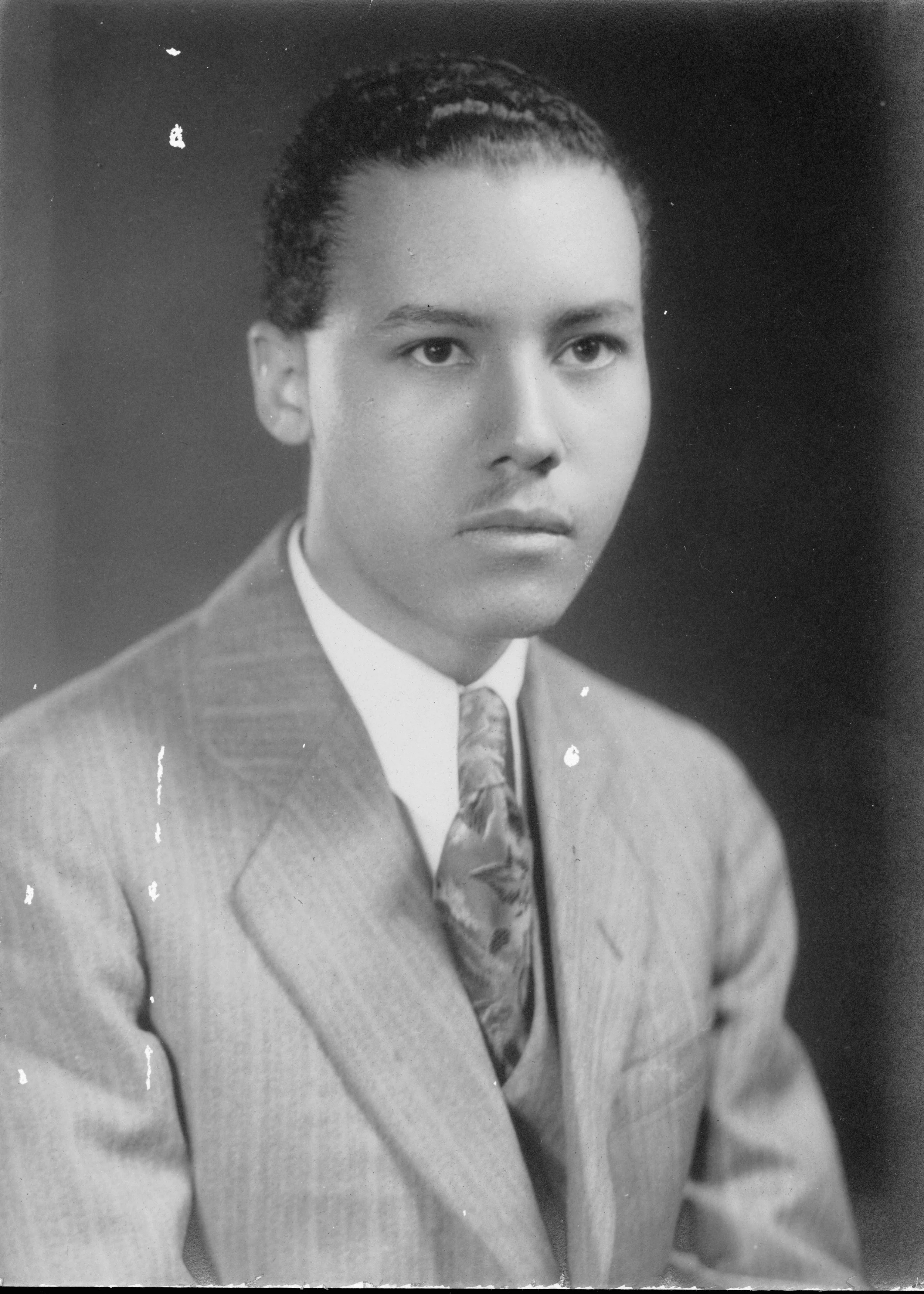
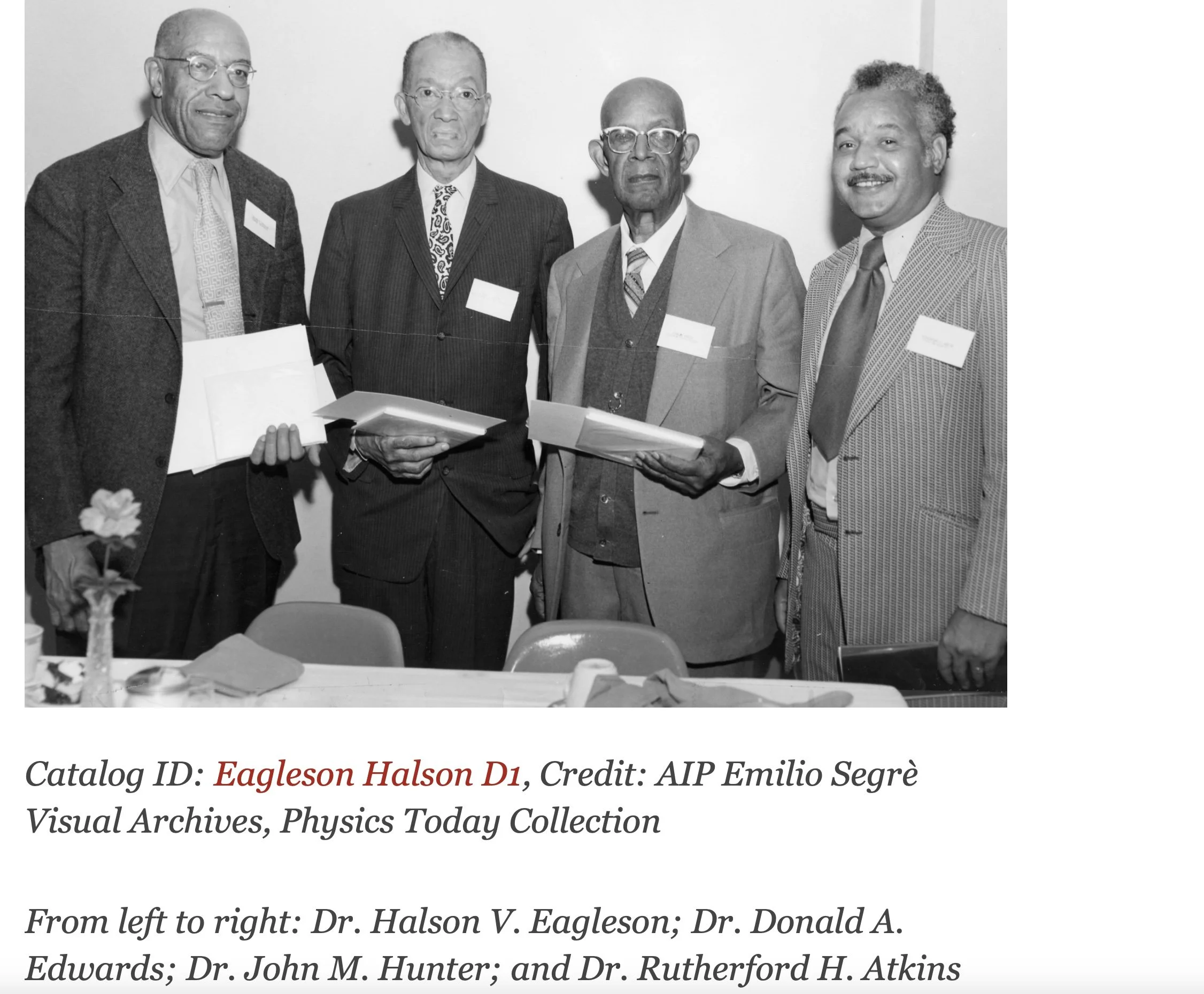
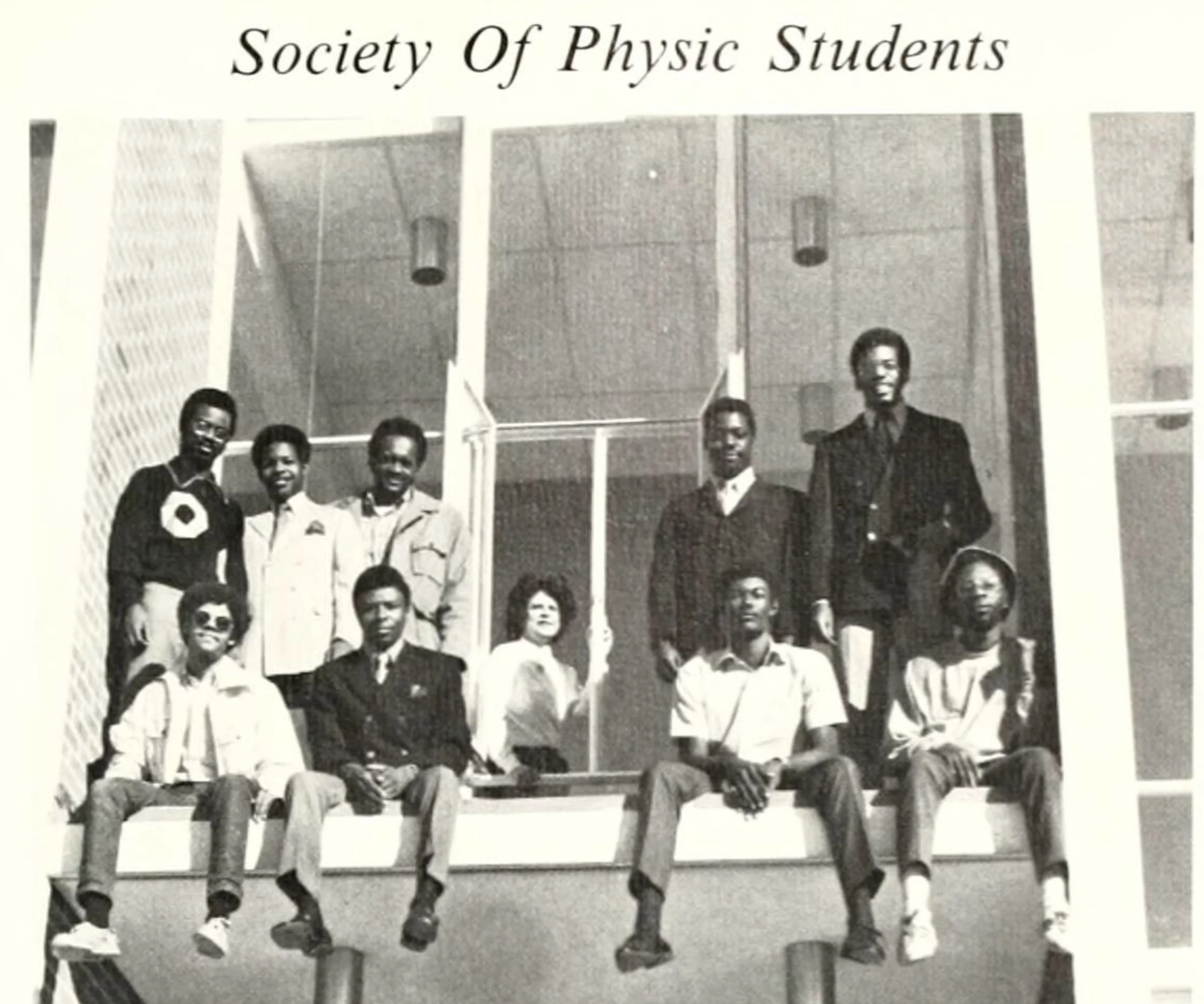
And it was known for its physics department and its ag school and its nursing. There was a campus. It was big and there were a lot of people there, thousands. And it was in the South. Some of the Southern accents were hard for me to pick up on. I didn't know anybody, and I felt very much alone.
So I went from a state of elation to this state of real sadness and depression. I don't know that I can do this. And I would think back sometime about these knuckleheads when I was in high school, dorks. “Phillips, you ain’t never going to do anything in physics. You're not getting into A&T, this, that, and the other.”
And I think, “Well, maybe they're right. Maybe I don't have it.”
One evening, it's about 9:00, it had just gotten dark. I hear this knock on my dorm door. I open the door. I don't know anybody in the place. Don't know who it could be. When I opened the door, there was this very tall, extremely thin, tremendously distinguished‑looking African‑American gentleman with a bowtie, a white shirt, a jacket, a crowbar in one hand and a hammer in the other, and five students with him.
I'm looking at this something, you don’t see this every day.
And he says, “I would like to introduce myself. I'm Professor Donald Edwards. I'm the chair of the physics department here at North Carolina A&T State University. I want to welcome you warmly to our department, and I ask that you join me on a little adventure.”
So this is the night Professor Edwards walked us across the campus. We had to walk the whole diagonal length of the campus because the physics building was in the northeast corner of the campus.
So we go up there and he's looking around like this, and he takes out his keys when we get to Cherry Hall, which was where physics was. And he sneaks us in through the side door of the building. I look in and I could tell the building was under a little bit of construction. We probably shouldn't have been in there.
So we went into the building, we went up some stairs, down a hallway, and what did we go into? We went into a physics lab. When I looked into the lab, I recognized everything that was in there. But we weren’t there to do physics. We were there to steal.
What might we steal, you could ask. Well, we were there to steal blackboards, because there was an array of blackboards in this lab and Professor Edwards insisted that each of his students, his new freshman students, would have their own blackboard for study in their dorm room. So he took the crowbar and he took the hammer and we yanked six blackboards off that wall. They were heavy. These were real blackboards and these were blackboard blackboards, not this wimp stuff they've got today. And we schlepped them across the campus.
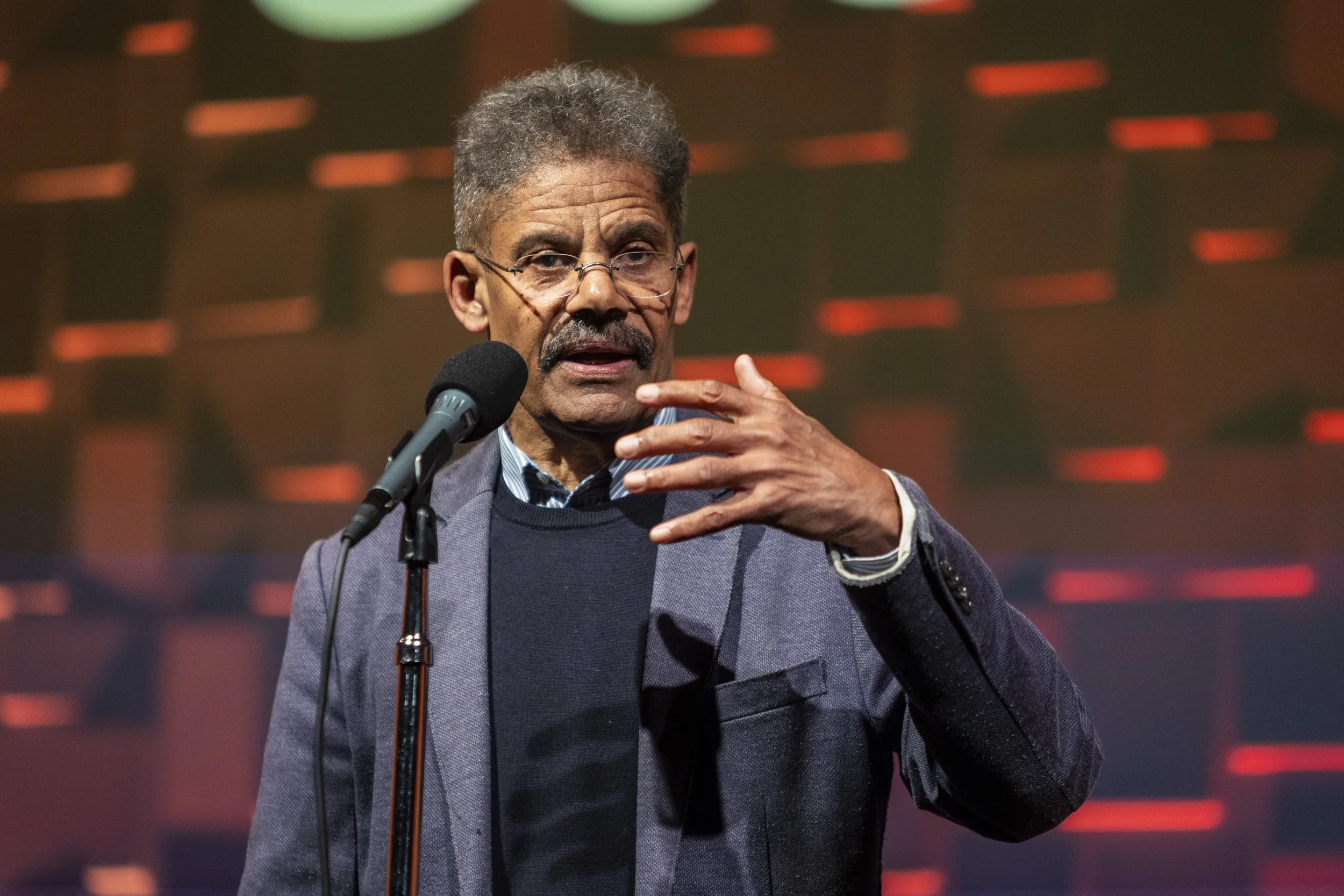
Ken Phillips shares his story at LAist in Los Angeles, CA in December 2024. Photo by Louis Felix for LAist.
And Edwards, I never saw him smile once in four years, but he was the kindest person on earth. He helped us schlep those things into our dorm rooms. Each student got one. He helped us put them up on the wall and then he said to us this. He said, “Look, you are here for one reason, that is to leave with a degree in physics. I don't want to see you playing around. I want you to study. I want you to work with each other. I want you to use these blackboards as the focus of your community. I want you to argue with each other over the concepts. And when you have 10 equations to solve for homework assignment, I want you to do 20. Because that's what you're going to need to make it.”
And then he says, “Gentlemen, I teach the senior course in x‑ray diffraction, and you will certainly take that course when you get to be seniors. There will be no options.”
And then very quietly, he just slipped off into the night, wished us well. And what he had given us was community. That's what he gave us.
Four years later, after having met Dr. Edwards, A&T graduated 400 students from across all of its students. Of those 400 students, six of us got degrees in physics, and I was one of the six.
Now, I have been teaching physics in some form or another for about 38 years to people of all ages, both in classic formal classroom learning as well as at the Science Center, which is an informal learning. And students ask me all kinds of questions. They ask physics questions, which are fun to answer, but they also ask me a different kind of question. And that question is fundamentally this. “Is it going to be okay? Am I going to be okay? Am I going to make this?” Because they're all scared, just like I was when I was a kid. I was scared.
And I can answer with some certainty when I respond, and I said, “You know something, nobody can really tell you how your life is going to work out. It's just too complex. There are too many variables. You know that. But you have agency in what you do. And that agency begins with you saying that you're not going to give up, that you're not going to quit. And if you don't give up, then I think what you will find is the odds are in your favor because a very few people who will give you permission have a great deal more power than an army of people who try to tell you what you can't do. And therein, therein lies your salvation.”
So I want to thank you, Professor Edwards, I want to thank you, Uncle Billy, and I want to thank you.